Fairlington Condo and Townhome Buying Basics in Arlington
May 14, 2026
May 14, 2026
If you are shopping in Fairlington, one of the biggest mistakes you can make is assuming every brick home works the same way. A home that looks like a townhouse may still be a condominium, and that difference can affect your monthly costs, renovation plans, insurance questions, and purchase timeline. The good news is that with the right document review and a clear inspection strategy, you can buy with confidence. Let’s dive in.
Fairlington is not one single master association. According to the Fairlington Citizens Association, the area includes seven neighborhood or ownership entities: Fairlington Villages and Fairlington Court in North Fairlington, plus Arbor, Commons, Glen, Green, Meadows, and Mews in South Fairlington.
That matters because rules, fees, amenities, and disclosure packages can vary by association. Before you make assumptions based on a listing, you should confirm the exact governing entity for the specific unit you are considering.
Fairlington also has deep local history. Arlington County identifies Fairlington as an Essential Property dating to 1943 to 1945, and the county includes the Fairlington Historic District on its National Historic Places list.
For buyers, that historic character is part of the appeal, but it also reinforces the need to understand maintenance responsibilities, architectural rules, and the condition of older building components. In a neighborhood like Fairlington, charm and due diligence go hand in hand.
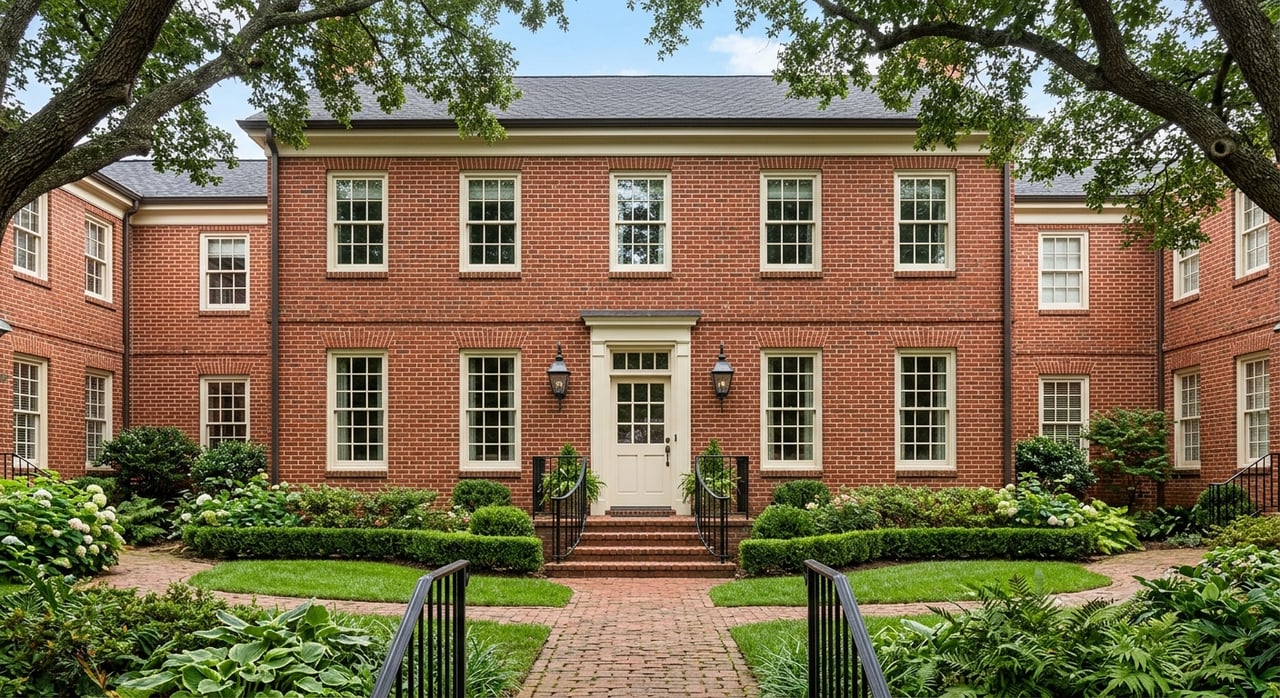
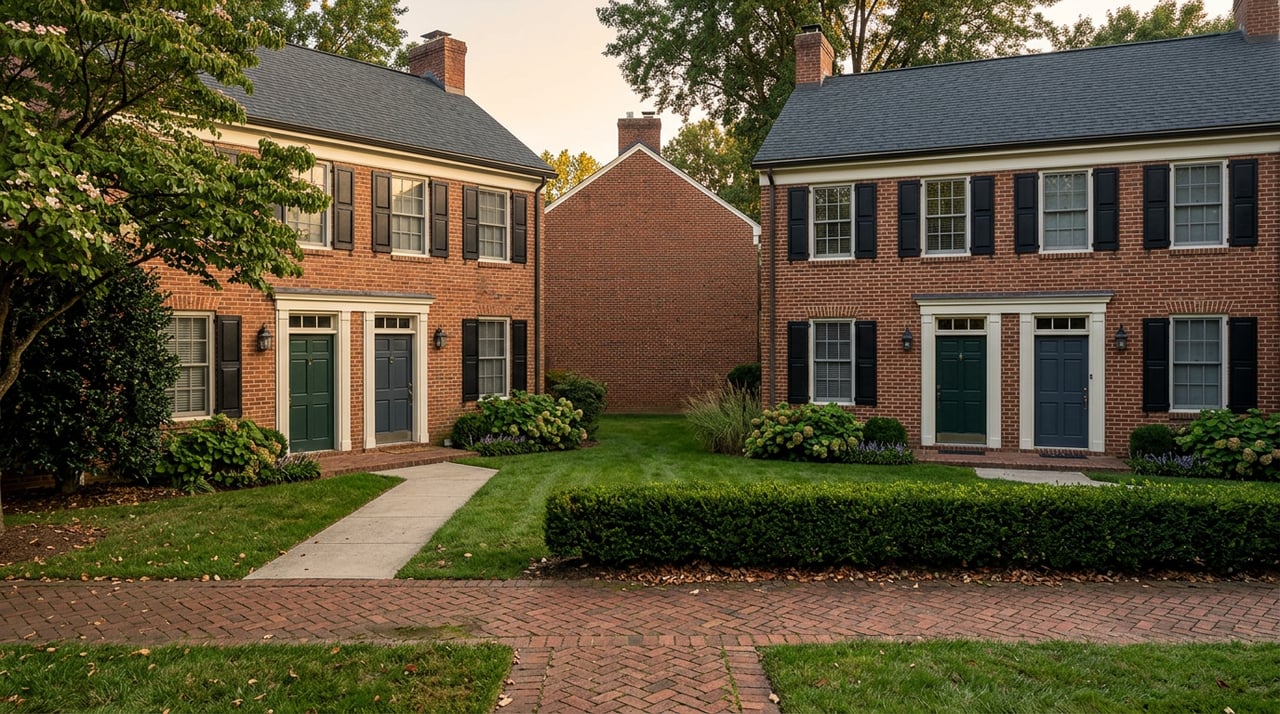
One of the most important Fairlington buying basics is this: the building style and legal ownership structure are not always the same thing. In Fairlington Villages, published model pages show both apartment-style homes and townhouse-style homes, but townhouse-style units can still carry condominium ownership and condo fees.
That means you should not rely on exterior appearance alone. A brick home with its own front door may feel like a traditional townhome, but your deeded ownership language and association documents are what define the property interest.
In Fairlington Villages, apartment-style homes are located in multi-unit, two- or three-floor buildings. Middle and upper units often include balconies.
Townhouse-style models are labeled as town houses and include one-bedroom, two-bedroom, and three-bedroom layouts. Published examples range from about 1,400 square feet for a one-bedroom Edgewood townhouse to 2,145 square feet for a three-bedroom Arlington townhouse.
Apartment-style examples range from about 700 to 767 square feet for a one-bedroom Braddock model to 1,422 square feet for a three-bedroom Buckingham model. That variety is one reason buyers are often drawn to Fairlington. You can find very different layouts and living patterns within the same broader neighborhood.
In Fairlington Villages, the resident handbook explains that each owner’s interest is tied to an undivided interest in the common elements. The model pages also list condo fees for townhouse-style homes.
In practical terms, that affects how you evaluate monthly costs, maintenance responsibilities, insurance questions, and future renovation plans. If you want an informed offer strategy, start with the legal structure, not the curb appeal alone.
Monthly fees are a major part of the Fairlington cost picture. In Fairlington Villages’ 2025 published fee schedule, fees range from $277 for smaller one-bedroom apartment models up to $666 for the three-bedroom Arlington townhouse, with other examples including $476 for the Edgewood townhouse, $495 for the Clarendon townhouse, and $638 for the Dominion townhouse.
Those numbers are important, but the line item itself does not tell the whole story. In Fairlington, you should compare total carrying cost rather than focusing only on mortgage payment.
In Fairlington Villages, the handbook says association fees fund:
The same handbook says the community includes six pools, 12 tennis courts, a Tot Lot, picnic areas, a community center, and a management office. Amenities and scale can vary by association, so buyers should verify what applies to the exact property they are considering.
Fairlington Commons, for example, describes itself as a 229-unit community with swimming pools, play areas, tennis courts, and basketball hoops. That is a useful reminder that two homes in Fairlington may come with different amenity packages and different fee structures.
Fees are only part of the financial picture. The Fairlington Villages handbook notes that special assessments can be levied if needed.
For that reason, a smart buyer looks beyond the current monthly amount. You also want to know whether the association has strong reserves, major capital projects coming up, or a history of additional charges tied to repairs and improvements.
In Virginia, the resale certificate is one of the most important due diligence documents for a condo or common-interest purchase. Under Virginia’s Resale Disclosure Act, the seller must obtain and deliver it, and the association generally has 14 days to provide it.
The resale certificate can include governing documents, assessments, special assessments, capital expenditures, reserves, the current budget, the reserve study, recent board minutes, insurance coverage, litigation, and restrictions on rentals, parking, occupancy, signs, and other use limits. If a home belongs to more than one common-interest community, each association must provide a certificate.
That is why document review in Fairlington should never be treated as a formality. It is one of the clearest ways to understand what you are actually buying.
As you review the package, pay close attention to:
Virginia law also requires condominium boards to make the annual budget available and to conduct a reserve study at least once every five years, with annual review. In an older community like Fairlington, that reserve information can be especially important.
If you are considering cosmetic updates or larger changes, review the association rules early. In Fairlington Villages, the handbook says renovation or change requests can require board and architectural-control approval.
Depending on the scope of work, the submission may include photos, annotated floor plans, professional drawings, a stamped engineer’s letter for wall changes, permits, and an asbestos testing report from a reputable lab. That does not mean improvements are impossible, but it does mean you should understand the process before you fall in love with a renovation plan.
For buyers who want to remodel soon after closing, this can shape both timing and budget. A measured review now can prevent frustration later.
Insurance is another area where details matter. The resale documents can help you confirm the association’s master-policy coverage and who may be responsible for the deductible in the event of a claim.
That is not a small issue. The Fairlington Villages handbook states that the current master-policy deductible is $15,000 per insurable event, so buyers should verify how deductible responsibility is allocated before writing an offer.
This is one of those details that can feel technical until there is water damage or another covered loss. Clear answers up front can help you avoid expensive surprises.
Because Fairlington’s housing stock dates to the mid-century period, your inspection strategy should be tailored to the age and construction of the property. General condition still matters, of course, but some items deserve extra attention.
The most relevant inspection topics include water intrusion, drainage, gutters, plumbing fixtures and supply lines, water heaters, HVAC equipment, exterior doors, and other shared-envelope elements. If you are planning structural changes, those should be evaluated carefully alongside the association’s approval requirements.
In Fairlington Villages, maintenance charts and water-damage examples show that some items are association responsibilities while others remain the owner’s responsibility. That is why an inspection report should never be read in isolation.
A repair issue may look straightforward until you compare it with the governing documents and maintenance matrix. When those pieces are reviewed together, you get a much clearer picture of risk, responsibility, and next steps.
Fairlington’s appeal is not just architectural. Arlington County describes nearby Shirlington as a walkable arts-and-dining district with restaurants, shops, parks, a dog park, a library, and bus service from Shirlington Bus Station.
The county also notes access to Washington, Crystal City, the Pentagon, and Washington National Airport through trail and bus connections. That convenience, along with historic character and established housing stock, is part of what keeps Fairlington on many buyers’ short lists.
None of that guarantees future appreciation, of course. But it does help explain why many buyers are willing to weigh monthly fees and association rules against the benefits of location, amenities, and neighborhood character.
A strong Fairlington purchase strategy starts with asking better questions early. You want to confirm the governing entity, understand whether the home is legally a condo or another ownership type, review the fee structure, and study the resale documents before contingencies expire.
You also want an inspection approach that reflects the age of the buildings and the realities of shared maintenance. In a community with multiple associations, historic housing stock, and detailed rules, preparation is not optional. It is how you make a confident decision.
If you are weighing Fairlington against other Arlington or Alexandria options, it helps to work with an advisor who can keep the process organized and factual. If you want a measured, high-touch buying strategy, connect with Herbert Riggs for guidance tailored to your move.
Stay up to date on the latest real estate trends.
Riggs & Co. has established an award-winning real estate practice with a vision that pays attention to detail and provides extraordinarily intelligent advice.