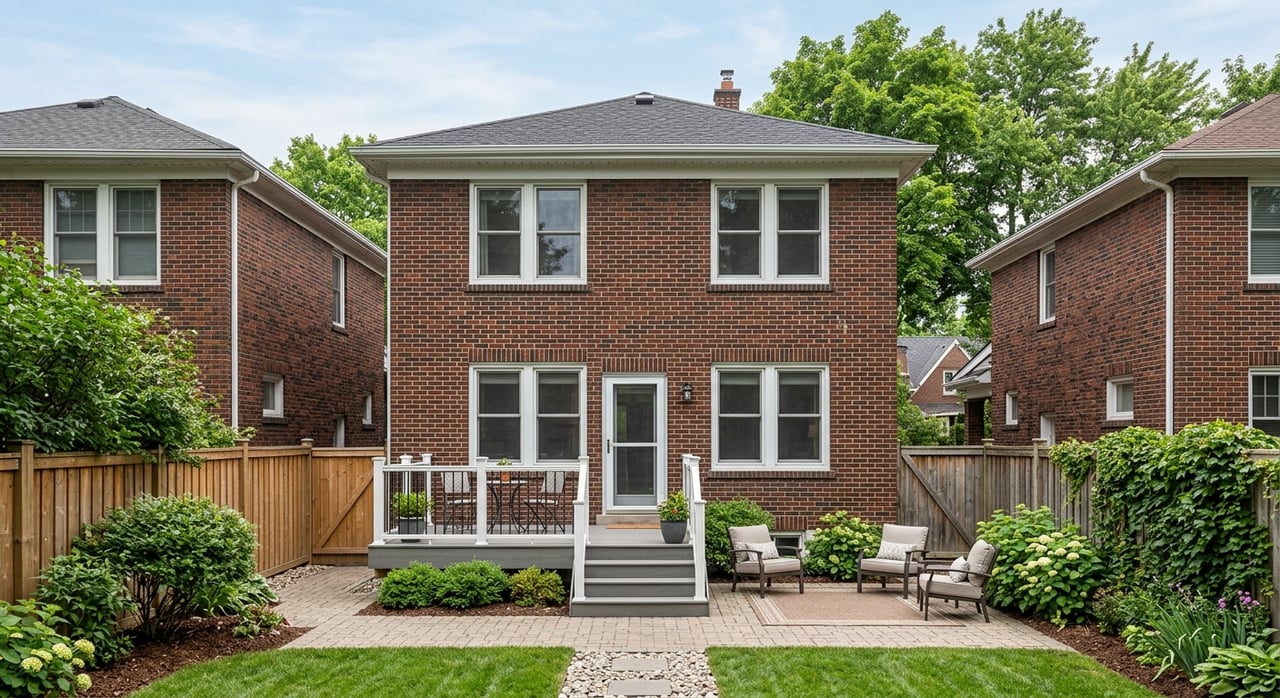
Franconia and Kingstowne Rental Investment Guide
May 7, 2026
May 7, 2026
If you are thinking about buying a rental property in Franconia or Kingstowne, you are probably asking the right first question: will the numbers work here? These are not bargain-basement rental markets, and that is exactly why small investors need a careful plan. When home values are high and rents are solid but not unlimited, success usually comes from disciplined underwriting, smart property selection, and steady management. Let’s dive in.
Franconia and Kingstowne sit in a part of Fairfax County where housing demand and income levels support a strong rental market. Franconia has a 76.0% owner-occupied rate, while Kingstowne is 71.2% owner-occupied. That means rentals are not the dominant housing type, but there is still meaningful demand from households who want to lease rather than buy.
The rent and income numbers also point to a higher-value market. Median gross rent is $2,605 in Franconia and $2,406 in Kingstowne, compared with $2,341 across Fairfax County. Median household income is above $151,000 in both communities, which suggests that well-maintained homes can compete for renters willing to pay for location, condition, and convenience.
For a small investor, that creates a clear picture. These are stable, execution-sensitive markets, not easy high-yield plays. You are generally buying into quality and long-term demand, not chasing unusually high cash flow.
Current rent benchmarks vary by ZIP code and property type, which is why broad averages only tell part of the story. In 22310, average rents are reported around $2,733. In 22315, the average is around $3,200.
Those averages come with wide ranges, which matters when you are underwriting a specific home. Reported asking rents range from about $900 to $6,200 in 22310 and from about $950 to $5,000 in 22315. That spread tells you one thing quickly: your exact property type and condition matter more than the ZIP code headline.
Townhomes appear to be the easiest segment to compare because there are more current listings and clearer pricing clusters. Selected active townhome listings in these areas are mostly in the mid-$3,000s, including examples around $3,200 to $3,450 in 22310 and roughly $2,950 to $5,000 in 22315. If you are a first-time investor, that makes townhomes one of the cleaner product types to analyze.
Purchase prices in both areas are elevated, which is the key reason small investors need conservative expectations. Average home values are about $673,043 in 22310 and $676,476 in 22315. Those values can support long-term wealth building, but they also raise your monthly carrying costs.
That is why it helps to think beyond rent alone. A property can rent well and still disappoint if the purchase price, taxes, insurance, and maintenance leave too little room for error. In Franconia and Kingstowne, the margin for success usually comes from buying the right home at the right basis and managing it well over time.
For many small investors, townhomes are the clearest starting point in Franconia and Kingstowne. The current listing mix suggests a healthy supply of townhome rentals, and that gives you better visibility into likely rent ranges. It also makes it easier to compare similar homes by size, layout, and location.
Detached homes can still work, but they are harder to underwrite from broad market data. Available rental inventory for houses is limited, with only a small number of homes listed for rent in 22310 and 22315 at the time of the research. That scarcity can be good for owners, but it also means you should rely on very local comparable properties instead of general market averages.
Condos may also deserve a look, especially if you want a lower purchase price than a townhome or detached home. Still, your analysis should stay property-specific. In this market, there is no substitute for matching a prospective purchase to current and recent comps that closely resemble it.
The renter pool in Franconia and Kingstowne appears to be made up largely of smaller households with commuter-oriented needs. Fairfax County renter households average 2.54 people, while Franconia averages 2.44 persons per household and Kingstowne averages 2.51. That tends to support homes that balance space with convenience and lower maintenance.
Commute patterns also matter. Mean travel time to work is about 31.1 minutes in Franconia and 30.4 minutes in Kingstowne. If your property offers practical access to major commuting routes or everyday services, that can strengthen its appeal to renters comparing options nearby.
This is also a highly connected area. Broadband subscription rates are 98.9% in Franconia and 97.6% in Kingstowne. For many renters, reliable work-from-home capacity and daily connectivity are simply expected, so property presentation should reflect that reality.
In a market like this, conservative underwriting is your best protection. Instead of starting with the most optimistic rent you can find, start with a realistic comp set and assume normal operating costs from day one.
Your review should include:
The IRS identifies common rental expenses such as advertising, cleaning and maintenance, commissions, depreciation, insurance, interest, legal and professional fees, management fees, repairs, taxes, and utilities. That list is a good reminder that rent is only one side of the investment story.
One detail that often surprises newer landlords is the difference between a repair and an improvement. In general, repairs are treated as current expenses, while improvements are capitalized and recovered over time through depreciation. That distinction matters for recordkeeping and long-term planning.
In practical terms, you should keep organized records from the start. If you replace worn hardware or patch damaged drywall, that may fall into routine repair territory. If you undertake a larger upgrade that adds value or extends the life of the property, you may be dealing with an improvement instead.
Property taxes should be treated as a recurring operating cost, not just a closing line item you think about once. Fairfax County lists a 2026 proposed base real estate tax rate of $1.1225 per $100 of assessed value. The county also reviews assessments annually as of January 1.
That means your future tax bill can change over time, especially in a market with higher home values. When you run your numbers, leave room for tax movement instead of assuming today’s estimate will stay flat forever.
If you plan to own a rental in Franconia or Kingstowne, lease administration matters almost as much as pricing. Virginia law limits security deposits to no more than two months’ periodic rent. Fairfax County also notes that rent generally cannot be increased until the end of the lease term.
The county further states that written notice is usually due about 30 days before the next rent due date, and the security deposit must be returned within 45 days after the tenancy ends, along with an itemized list of deductions if there are any. Fairfax County also says there is no local rent cap. These rules make documentation, timing, and bookkeeping especially important for landlords.
Some small investors start by self-managing because it feels more cost-effective. That can work if you have the time, systems, and discipline to handle leasing, notices, maintenance coordination, bookkeeping, and tenant communication. In a regulated environment, however, management is not just about convenience.
It is also about compliance and consistency. As your schedule tightens or your property count grows, professional management can become more valuable because someone needs to stay on top of screening, lease terms, deposit handling, notice timing, rent collection, and repair coordination. In a market like Franconia or Kingstowne, strong operations can protect returns just as much as strong leasing.
If you are buying your first rental here, keep your approach simple and disciplined. Look for a property type with enough local rental comps to support a clean estimate of market rent. In these neighborhoods, that often points to townhomes first.
Then stress-test the numbers. Ask what happens if rent comes in a bit below target, if turnover costs more than expected, or if a repair hits in the first year. If the deal only works under perfect conditions, it probably is not the right fit.
A smart starting framework looks like this:
Franconia and Kingstowne can make sense for small investors, but the opportunity is best viewed through a long-term lens. These communities show strong household incomes, meaningful rental demand, and rent levels that can support well-run homes. At the same time, purchase prices are high enough that you need careful analysis, not guesswork.
If you buy thoughtfully, use local comps, and manage the property with discipline, a rental here can be a solid part of a long-term portfolio. The goal is not to chase a guaranteed win. The goal is to build a durable investment in a Northern Virginia market where preparation and execution matter.
If you want a more precise read on rents, purchase strategy, or day-to-day landlord operations in Franconia or Kingstowne, Herbert Riggs offers hands-on guidance and property management support tailored to small investors.
Stay up to date on the latest real estate trends.


Riggs & Co. has established an award-winning real estate practice with a vision that pays attention to detail and provides extraordinarily intelligent advice.