The Six-Acre Park In Beverley Hills That Birders Cross The Country For
August 27, 2026
August 27, 2026
Walk down Beverley Drive most mornings between now and mid-October and you'll pass a handful of people standing very still, binoculars up, staring into a stretch of trees no bigger than a large backyard. They are not lost. They are there on purpose. Some of them are visiting from as far as the West Coast or Europe, having found this exact address through a hyper-detailed fan site two Alexandria residents built just for this park.
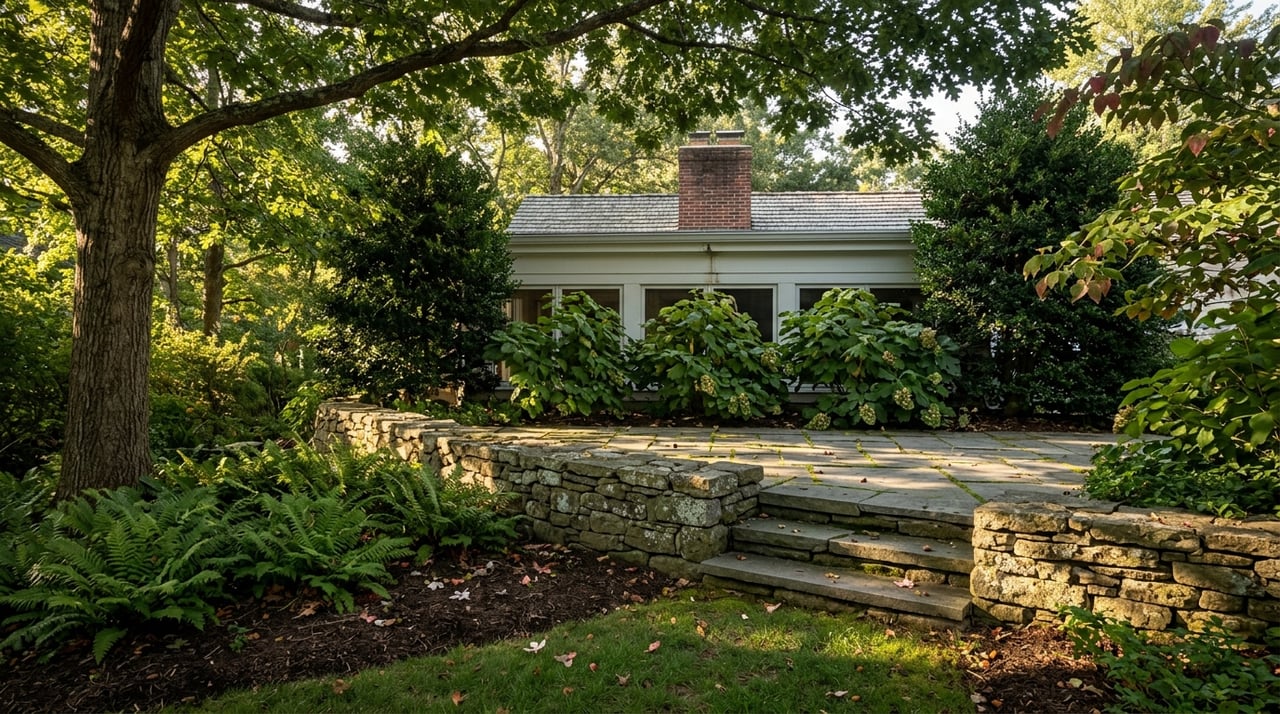
The park is called Monticello Park, and if you've lived in Beverley Hills for any length of time you've probably driven past its unmarked entrance on Beverley Drive without registering what's inside. It is easy to miss. That's sort of the point.
Monticello Park covers just over six acres. For comparison, that's smaller than most of the single-family lots that make up the rest of the neighborhood combined into one plot. There's no visitor center, no interpretive signage, no parking lot. Local birding guides list the amenities as a picnic table, a bench, and a small stream. That's the whole inventory.
And yet the Virginia Department of Wildlife Resources lists Monticello Park on its statewide Birding and Wildlife Trail, noting that the park is renowned among birders for a diversity of migrating warblers so complete that nearly every eastern species has been recorded there at some point. Birders and photographers have logged 36 different warbler species over the years, according to BirdWatching magazine's hotspot profile, a number that would be unremarkable at a thousand-acre refuge and is genuinely strange for a park you could walk end to end in ten minutes.
The mechanism is simple once you see it. Monticello sits on a tree-covered ridge in the middle of a built-out residential grid. Migrating songbirds flying at night see a small green landing pad surrounded by rooftops and treat it as a rest stop. Because the park is small, the birds that land there don't have anywhere to spread out. A stream runs the length of the park, about an eighth of a mile, with a path following each bank, and birds that would normally stay high in the canopy come down to drink and bathe within a few feet of the trail. Bigger parks dilute the birds across more territory. This one concentrates them.
Spring gets the reputation, and it earns it. The reliable stretch runs from the third week of April through Memorial Day, when the trees fill with the kind of saturated warbler plumage that shows up on birding calendars. But the fall window matters just as much to anyone who actually lives four blocks away and doesn't need a calendar excuse to go look. According to the local birding community's own reference site for the park, the second good stretch runs from mid-August through mid-October, which means it has already been open for about a week and a half by the time you're reading this.
Fall migration is quieter and the birds are duller, molted out of their breeding colors, which is exactly why serious birders treat it as the harder, more interesting identification challenge. Species regularly seen at Monticello in both spring and fall include Black-throated Blue, Blackpoll, Chestnut-sided, Magnolia, and Northern Parula warblers, along with Wood Thrush, Scarlet Tanager, and Baltimore Oriole. A local birder named Tom Albright has been logging arrival and departure dates at the park since 2005, and his records show a rising number of Cape May Warbler sightings in recent years, one of the more specific, ground-level ways anyone has documented how migration patterns shift over two decades in a single Alexandria park.
If you want the deep reference, MPNature.com, built by Alexandria residents Ashley Bradford and William Young, has individual pages for more than 120 species with arrival windows, vocalizations, and photos specific to this park. It's the kind of hyper-local resource that only gets built by people who've spent hundreds of hours at the same six acres and decided to write it all down.
For gear, you don't have to leave the area. One Good Tern, a birding supply shop on Fern Street, has outfitted plenty of the neighborhood's binocular-carrying regulars.
None of this happened by city planning. Monticello Park's warbler reputation is an accident of topography that the North Ridge Citizens' Association has spent decades protecting rather than creating.
The North Ridge Citizens' Association, the civic group representing Beverley Hills as part of the broader North Ridge community, runs a Tree Canopy Restoration program because the numbers gave them a reason to. By the association's own estimate, tree canopy coverage across North Ridge has declined by roughly 40 percent since the neighborhood was first built. That decline matters directly to Monticello Park's warblers, since the whole draw depends on tree cover dense enough to look like a landing strip from a few hundred feet up at night. The NRCA's Tree Champions effort recruits residents to become certified Tree Stewards and plant replacement trees on both public and private land, and separately, the Northern Virginia Bird Alliance runs habitat workdays at the park itself throughout the year under a program called Stretch Our Parks, pulling invasive plants that would otherwise choke out the undergrowth migrating birds rely on.
None of this is abstract conservation happening somewhere else. It's neighbors, on a schedule, at a park most of them can walk to.
Once you notice that Beverley Hills runs on volunteer maintenance rather than institutional funding, you start seeing it elsewhere. Beverley Park, universally known in the neighborhood as The Pit, has an origin story that has nothing to do with recreation. The site served as a staging area and gravel pit while the surrounding homes were under construction in the 1930s and early 1940s. Once building wrapped, the site was cleaned up, a playground went in, and the park officially opened on June 13, 1943. The North Ridge Citizens' Association adopted the park formally and has maintained it since, most recently overseeing a 2017 renovation that added the nature play area and expanded seating that families use today.
Wheel Day works the same way. The parade of decorated bikes, trikes, and wagons has rolled through the neighborhood every Memorial Day weekend since the 1940s, organized entirely by NRCA volunteers with no city budget behind it. National Night Out, which the association hosts every August, is the same kind of thing: a tradition that exists because residents keep showing up to run it, year after year, not because anyone budgeted for it.
The association meets the second Monday of every month except July and August, dues are $20 a year, and meetings are open to anyone in the neighborhood who wants to show up. That's a low bar for the amount of neighborhood infrastructure it funds, from tree planting to a Civil War era gravel pit turned playground to a six-acre park that pulls birders in from three time zones away.
Monticello Park sits at 320 Beverley Drive, open year round from 6 a.m. to 9 p.m., free, with street parking only. There's a small off-leash dog area along the trail if you're combining a walk with the morning routine you already have. Bring good shoes. The path along the stream can get muddy, and if you're going to stand still for warblers, you'll want binoculars rather than a phone camera. Early morning tends to be most active, but unlike most birding spots, Monticello doesn't strictly follow the dawn rule. Activity here can pick up at almost any hour, which is part of what makes it forgiving for anyone squeezing a walk in before or after work.
The fall window runs through mid-October. After that, the park settles back into its quieter, year-round rhythm of cardinals, chickadees, and the occasional red-shouldered hawk, until the whole thing starts again in April.
It's a strange kind of neighborhood asset. Nobody built it, nobody is charging for it, and most people who live within five minutes of it have never walked the loop. But it's there, doing exactly what a tree-covered ridge with a stream running through it has always done, six acres at a time.
Whether you've lived here for twenty years or you're still learning which corner The Pit is on, Herbert Riggs and the team at Riggs & Co know this pocket of Alexandria in the kind of detail that only comes from working it block by block. Request a strategy consultation anytime you want to talk local specifics, whether that's this park, this street, or what's next for your home.
Stay up to date on the latest real estate trends.
Riggs & Co. has established an award-winning real estate practice with a vision that pays attention to detail and provides extraordinarily intelligent advice.